
Roofing built for El Paso sun and storms
Roofing Pros EPTX handles roof replacement, roof repair, storm and hail damage, leak repair, and roof inspections across El Paso and the surrounding area, on shingle, tile, metal and flat roofs. Every job starts with a free inspection and a written estimate, and we say plainly when a repair beats a replacement.
Which roofing service you need depends on one question: is the rest of the roof sound? If it is, you need a targeted repair; if problems keep returning in different places, you need a replacement. The free inspection answers that question in five steps: (1) you call and describe what you are seeing, (2) we inspect the roof and, where reachable, the attic, (3) you get a written estimate, (4) we do the work, and (5) if a spot has already been patched more than once, we say so in writing. Water stains and drips have their own diagnostic page: roof leak repair and detection.
| Your situation | Usual path | Who pays |
|---|---|---|
| One damaged area, rest of the roof sound | Roof repair | You |
| Repeat failures in different spots, worn surface everywhere | Roof replacement | You |
| Hail or wind damage after a storm | Storm and hail damage | Often your insurer, minus the deductible |
| Water coming in right now | Emergency roof repair | Depends on the cause |
| Flat or low-slope roof with ponding or open seams | Flat roof repair | You, or insurer if storm-caused |
| Cracked, slipped, or broken clay or concrete tile | Tile roof repair | You, or insurer if storm-caused |
Two terms that come up in every estimate: flashing is the metal that seals the joints where the roof meets a wall, chimney or vent, and decking is the wood sheathing under the roof surface. This page is not for you if you want a same-day price before anyone has looked at the roof. The takeaway: book the free inspection first.
Why roofs age faster in El Paso than the brochure says
A roof here does not fail the way a roof fails in a mild, wet climate. It fails from the top down, from sunlight, long before anything rots. El Paso sits in the Chihuahuan Desert at close to four thousand feet, and it is one of the sunniest cities in the country, which means a roof surface that runs far hotter than the air temperature on a summer afternoon.
Then the temperature drops sharply after dark. That daily expansion and contraction works every fastener, every seam and every sealant joint, over and over, for the whole life of the roof. Asphalt shingles lose the granules that shield them from the sun, go brittle, curl at the edges and start shedding. Sealants shrink and pull away from the metal they were bonded to. Flat-roof coatings chalk and crack.
The rest of the damage arrives in a hurry. Spring brings wind that gets under any shingle whose seal strip has already given up, and mid to late summer brings the monsoon, which can put more water on a roof in twenty minutes than the previous two months combined. A roof that has been quietly degrading all year gets tested all at once, and that is when most people in this city find out where they stand.
Roof replacement: when it is actually time
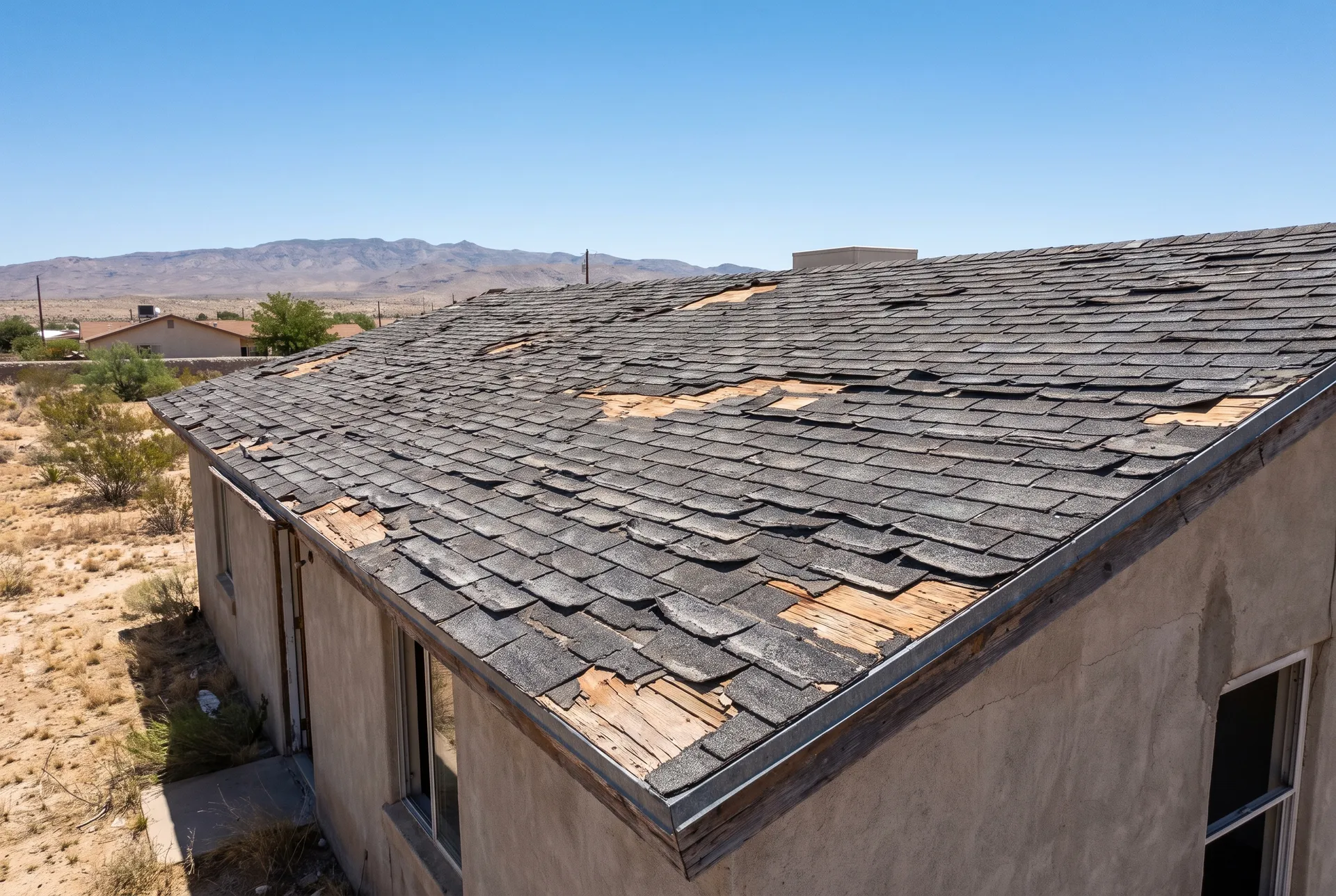
A full replacement is the right call when the problem is the roof itself rather than a spot on it. The usual signs are age combined with widespread granule loss, shingles that are curling or cracking across whole planes rather than in one corner, several leaks in different places, or a repair history where each patch buys less time than the one before it.
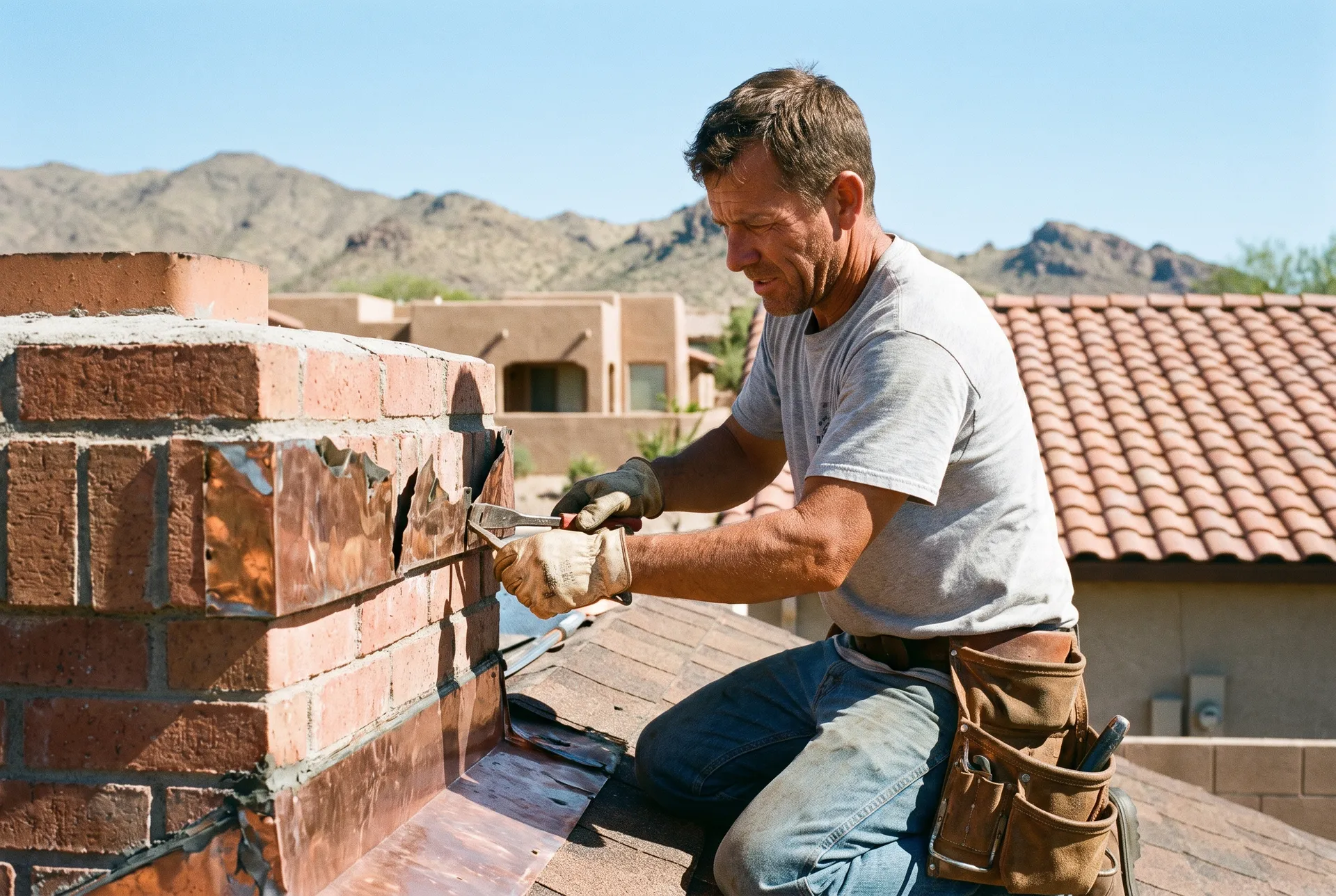
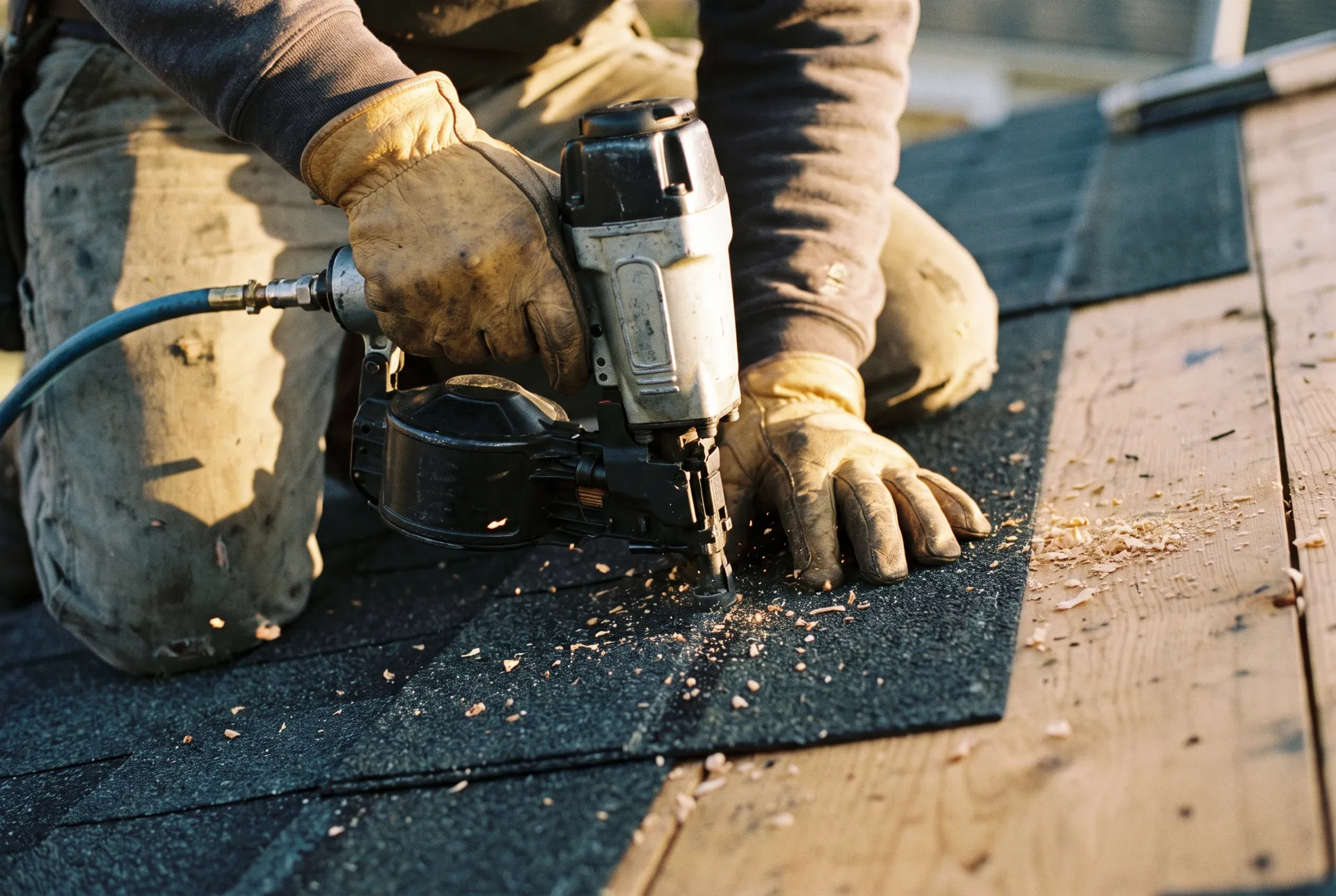
The part that decides how a replacement goes is what is under the shingles. Tear-off exposes the decking, and fasteners only hold in sound wood, so soft or delaminated decking has to be replaced rather than covered. This is also the moment to correct flashing that was wrong from the start, at chimneys, walls, valleys and every penetration, because those details are far cheaper to fix while the surface is open.
Most single-family homes here are a one to two day job once material is on site. Details and options are on the roof replacement page.
Roof repair: when the roof is fine and one part of it is not
Plenty of calls that start as replacement conversations end as repairs, and that is a good outcome. A roof with years of life left in it that has lost a few shingles to spring wind, or has a section of flashing that has pulled away from a wall, or has a cracked boot around a vent pipe, needs those things fixed and nothing more.
The judgment call is whether the damage is local or symptomatic. One damaged area on an otherwise sound roof is a repair. The same area failing for the third time, or similar failures appearing in several unrelated spots, usually means the material has reached the end of its service life and repairs are now buying months rather than years.
We will tell you which of those you have, in writing, and we would rather do the smaller job honestly. See roof repair.
Storm and hail damage: what to do and in what order
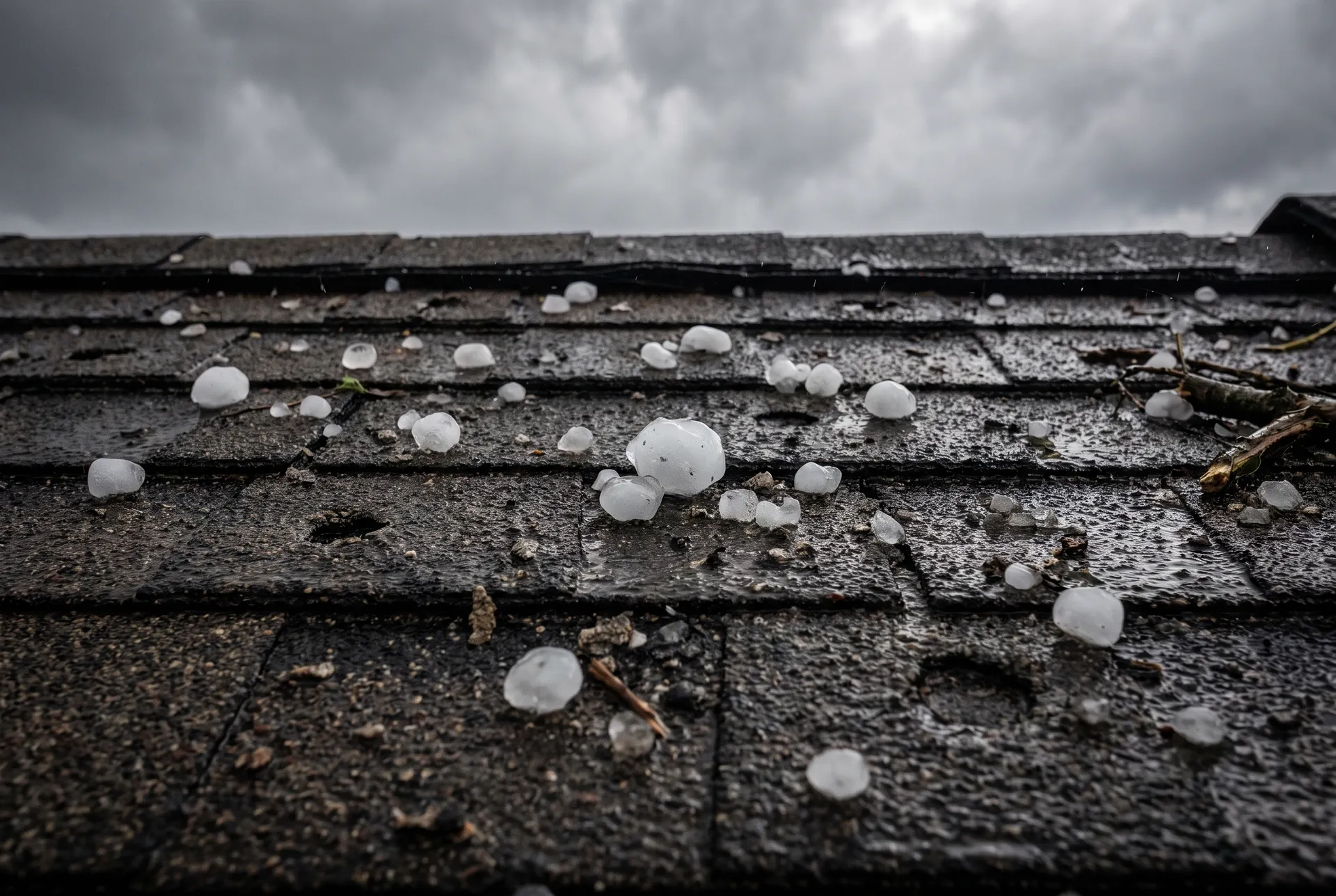
NOAA and the National Weather Service place the North American monsoon here roughly mid-June through September, and it is short and violent when it arrives; hail is a real risk in this city rather than a theoretical one. Hail damage is often invisible from the ground: the bruising that shortens a shingle life by years does not necessarily look like anything from the driveway, which is exactly why it goes unclaimed until the leak shows up long after the claim window has closed.
The order matters. Photograph everything before it is cleaned up, including material on the ground and any dents on soft metal such as vents, gutters and flashing. Get the roof inspected and documented. Then talk to your carrier. Cleaning the property first feels responsible and it removes your evidence.
Two warnings worth repeating. Storms bring crews from out of town who knock on doors and want a signature that day, and nobody who is not already on your roof should be telling you what is wrong with it. See storm and hail damage.
Leaks and water stains
A ceiling stain is rarely right under the point where water gets in, so leaks get their own diagnostic process. See roof leak repair and detection in El Paso, and if framing got wet, carpentry and framing.
Roof inspections: the one that is worth doing before you need it
An inspection is useful at four moments: before you buy a house, after a hail or wind event, before the monsoon each summer, and any time you are trying to decide between repairing and replacing. It is a straight look at what condition the roof is in, put in writing, with photographs of anything that matters.
What gets looked at is the whole system rather than the shingles alone: the surface, the flashings and penetrations, the edge details, the valleys, the drainage, and where access allows, the attic side, since attic staining and daylight through the deck tell you things the top surface will not.
Our inspections are free and they come with a written result rather than a verbal verdict and a price. See roof inspections.
Roofing materials that make sense in this climate
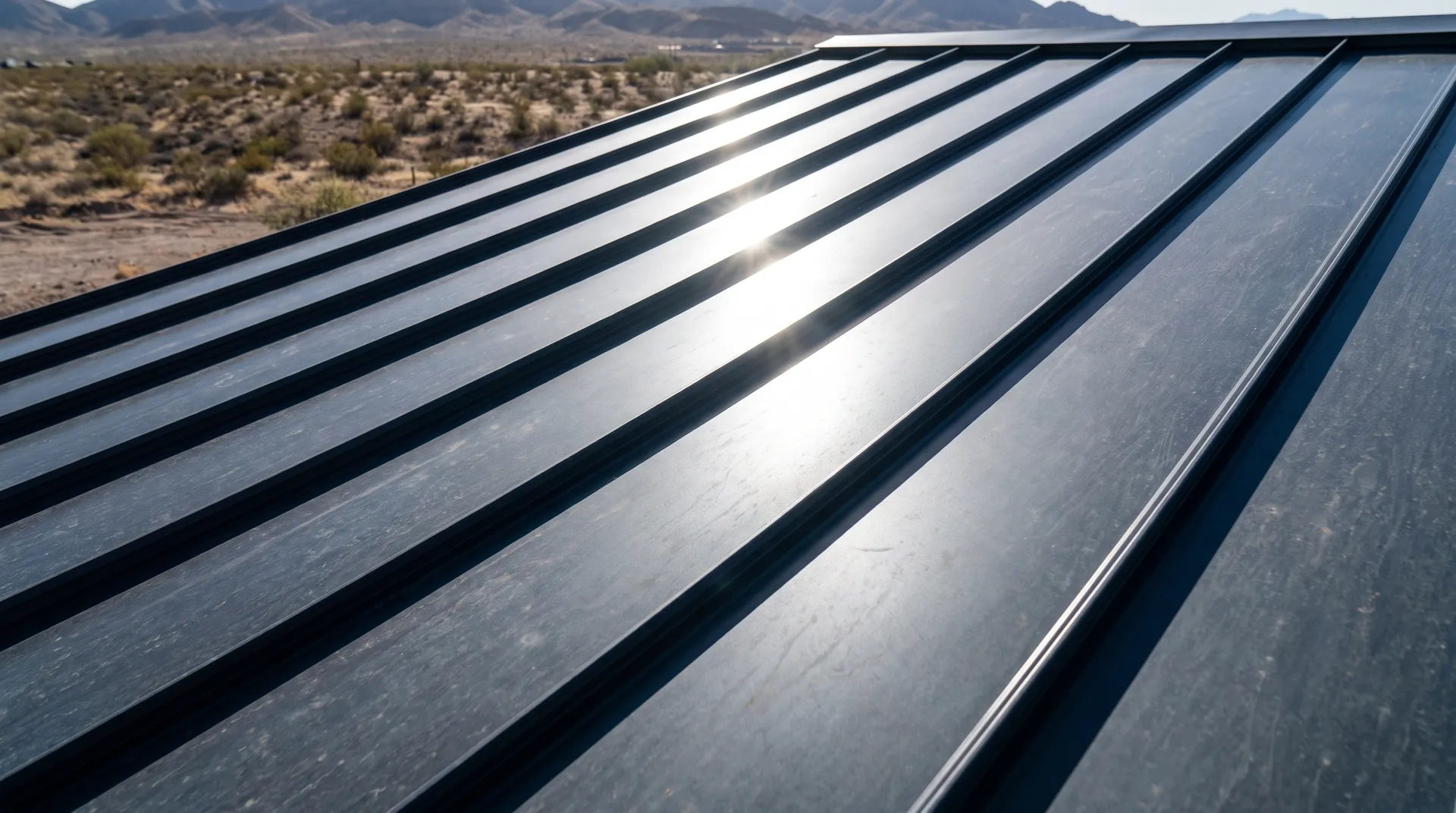
Asphalt shingles are the most common residential roof in El Paso, and quality within that category matters more here than in a mild climate, because ultraviolet exposure is what kills them. Metal roofing costs more up front, handles sun and wind extremely well, and reflects heat rather than absorbing it, which is a real consideration on a house that runs air conditioning for a large part of the year.
Flat and low-slope roofs use a different family of systems entirely: membranes, built-up assemblies and elastomeric coatings, all of which live or die on their seams, their penetration details and their drainage. Concrete and clay tile appear on plenty of homes here and are durable on the surface, though the underlayment beneath them is what actually keeps the water out and it has a much shorter life than the tile.
We will talk through what suits your roof, your budget and how long you plan to be in the house, rather than pushing whatever is easiest to install.
Flat and low-slope roofs
A large amount of El Paso housing has a flat or low-slope roof, and it behaves nothing like a pitched one. Water does not run off, it sits, so anywhere that ponds is under constant load and constant exposure. Failures start at seams, at penetrations, at the parapet wall and its cap, and at the drains or scuppers when they clog with dust and debris.
The good news is that low-slope roofs reward maintenance more than pitched roofs do. Keeping the drainage clear, re-detailing penetrations before they open up, and recoating on a sensible cycle can extend the service life of a sound system for years at a fraction of replacement cost.
The bad news is that the same neglect that a pitched roof shrugs off for a while will put water in your ceiling here in a single monsoon season. If you have a flat roof, look at it before summer rather than after.
Ventilation, attic heat and why it matters here
Attic temperatures on a summer afternoon in El Paso get extreme, and heat is not only a comfort and utility bill problem. It cooks the underside of the roof assembly, accelerates the aging of the shingles from below, and pushes your cooling system harder for the whole season.
Balanced ventilation means intake low, usually at the soffit, and exhaust high, at ridge or roof vents, so air actually moves rather than sitting. A lot of older houses in this city have exhaust with no working intake, painted-over or insulation-blocked soffit vents, or an assortment of vent types that fight each other and short-circuit the airflow.
Evaporative coolers add another wrinkle, because they are roof penetrations that carry water and they are a common leak source when their curbs and flashings are neglected. Ventilation gets looked at as part of any inspection or replacement rather than treated as a separate upsell.
How pricing and estimates work
We do not quote a roof over the phone. The price depends on the size and shape of the roof, the material, how many layers have to come off, how much decking has to be replaced, the flashing details and the access. Any number given before somebody has been on the roof is either padded to be safe or optimistic enough that it will change later, and neither of those helps you decide.
What you get instead is a free inspection and a written estimate that states the scope, what is included, what is specifically not included, and what happens on price if bad decking turns up at tear-off. That last item is the most common source of surprise bills in this trade, so it gets said out loud in advance rather than discovered on the invoice.
There is no pressure on the visit and no price that only holds if you sign that day. Start at free estimate or call us.
Hiring a roofer in El Paso without regretting it
After every significant storm, out-of-town crews work this city hard. Some are legitimate. Some collect deposits and disappear, and some do work fast enough that the problems only appear once they are three states away. A few things separate the two reliably.
Get it in writing, with the scope and the exclusions spelled out, before any money changes hands. Be suspicious of anyone who needs a decision on the doorstep today, and of any offer to cover your insurance deductible, which is not a favor and is not legal. Ask who is actually doing the work, the company you are talking to or a crew it has never met. And ask what happens when the tear-off exposes something unexpected, because the answer tells you how the rest of the job will go.
Read more about how we work on our about page.
Roofing and construction under one roof
This company was built out of carpentry. Two brothers, carpenters by trade, with 20 years of combined experience, doing roofing and construction together rather than as separate businesses. That is not a marketing arrangement, it changes what happens on your job.
When a tear-off exposes rotted decking, a soft rafter tail or fascia that has been wet for years, it gets cut out and replaced as part of the same job instead of pausing the work while a second contractor is found. When an addition needs a new roofline tied into an existing one, the people framing it are the people who will flash that transition. And when a leak has already damaged framing inside, the repair does not need a handoff.
The construction side is at construction and carpentry, and the towns we cover are listed under service areas.
Where we work
El Paso and the surrounding area. That covers central El Paso and the Lower Valley, the east side, the northeast and the area around Fort Bliss, the west side and Upper Valley, and the towns out along the valley: Horizon City, Socorro, San Elizario, Clint and Canutillo.
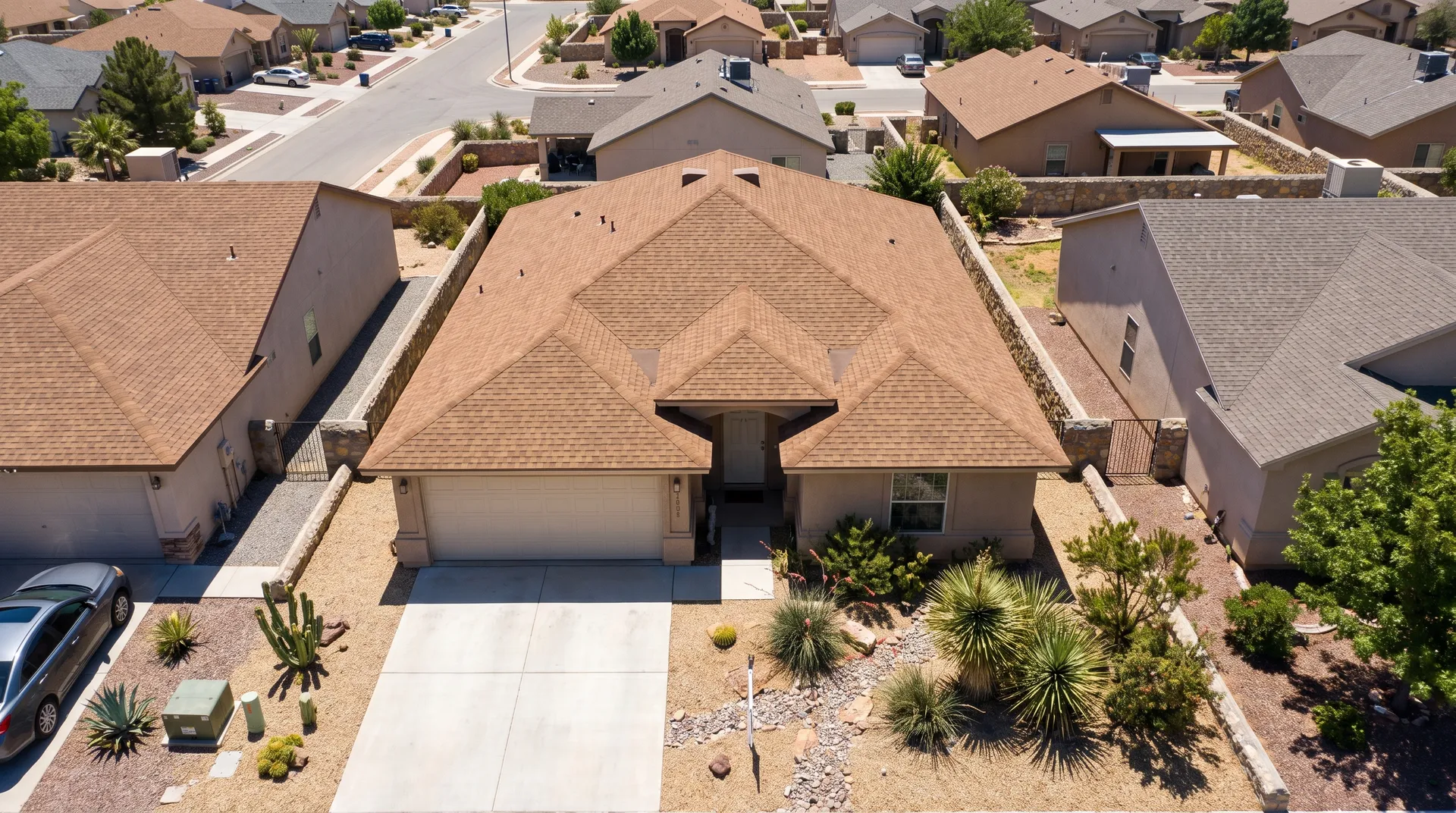
Roofs are not the same across that spread. Older central and valley neighborhoods carry more flat and low-slope roofs and more original framing with decades of repairs layered onto it. Newer developments on the east side and out toward Horizon City are mostly pitched asphalt shingle, younger, and much more exposed to wind on open ground.
If you are at the edge of that area, ask. The answer is usually yes and it will be straight either way.
Frequently asked questions
How much does a new roof cost in El Paso?
Cost depends on the size of the roof, the material, how many layers have to come off, and what the decking looks like underneath. We do not quote a price before we look at the roof, because a number given sight unseen is either padded or optimistic. The inspection and the written estimate are both free.
How long does a roof replacement take?
Most single-family homes in El Paso are a one to two day job once materials are on site. Bad decking found at tear-off, a complicated roofline, or weather during monsoon season can add a day. Larger or low-slope roofs take longer because coating and membrane systems need their own cure and application windows.
Do you work with insurance claims?
Yes. After a hail or wind storm we document the damage in detail and give you a written estimate you can hand to your adjuster. We do not file the claim for you and we do not promise an outcome, because the carrier decides that. What we can do is make sure the damage is properly recorded before it is cleaned up.
How long should a roof last in El Paso?
Less than the number printed on the shingle wrapper, in most cases, for the climate reasons covered above. That is why inspections matter more here than in a milder market.
Do you repair flat and low-slope roofs?
Yes. A lot of El Paso housing stock has flat or low-slope roofs, and they fail differently from pitched roofs. Water sits rather than runs, so ponding (water that stays standing on a flat roof), seams, penetrations and parapet details are where the trouble starts. They also respond well to maintenance and recoating, which is often far cheaper than replacement.
Can you tell me whether I need a repair or a full replacement?
That is the main question a free inspection answers. Age, the condition of the decking underneath, how widespread the damage is, and whether the same area has been patched before all feed into it. When a repair is the honest answer, that is what we will tell you, and we would rather have the smaller job and the phone call next time.
What should I do the day after a storm?
Photograph everything before anything is cleared, including material on the ground, because that is your documentation. Put a bucket under an active leak and move what is under it. Then get the roof looked at. Do not let anyone onto the roof who knocked on your door unprompted, and do not sign anything on the doorstep.
Do you do the work yourselves or send subcontractors?
Our own crew. Two brothers, carpenters by trade, with 20 years of combined experience, running the roofing and the construction side together. That is also why rotted decking or a bad rafter tail found at tear-off gets fixed inside the same job instead of stopping the work while another contractor is found.
Get a free estimate
Tell us what is going on and we will come look at it. Straight answer, written price, no pressure.