
Tile roof repair in El Paso, TX
Tile roof repair means fixing cracked, slipped, or broken clay or concrete tile, and checking the underlayment beneath the tile field, since that layer, not the tile itself, is what actually keeps water out. Roofing Pros EPTX repairs tile roofs across El Paso and the surrounding communities, and the inspection and the written estimate are both free.
Tile is common on stucco and Southwest-styled homes across this city, and it is a different repair trade than shingle work. The process runs the same five steps as any repair: (1) you call and describe what you are seeing, whether that is a cracked tile, a stain inside, or missing pieces after a storm, (2) we inspect the roof, walking it only where it is safe to walk tile and using boards to spread weight elsewhere, (3) you get a written, itemized estimate that says plainly whether the problem is the tile, the underlayment, or both, (4) we do the repair, matching tile where it can be matched and replacing underlayment where it has failed, and (5) a final walk-through. This page is not for you if you want a price before anyone has looked at the roof, or if you are outside El Paso and the surrounding communities. The takeaway: a cracked tile is rarely the real problem by itself, the underlayment under it is usually the thing that decides whether you have a leak, and a free inspection tells you which one you actually have.
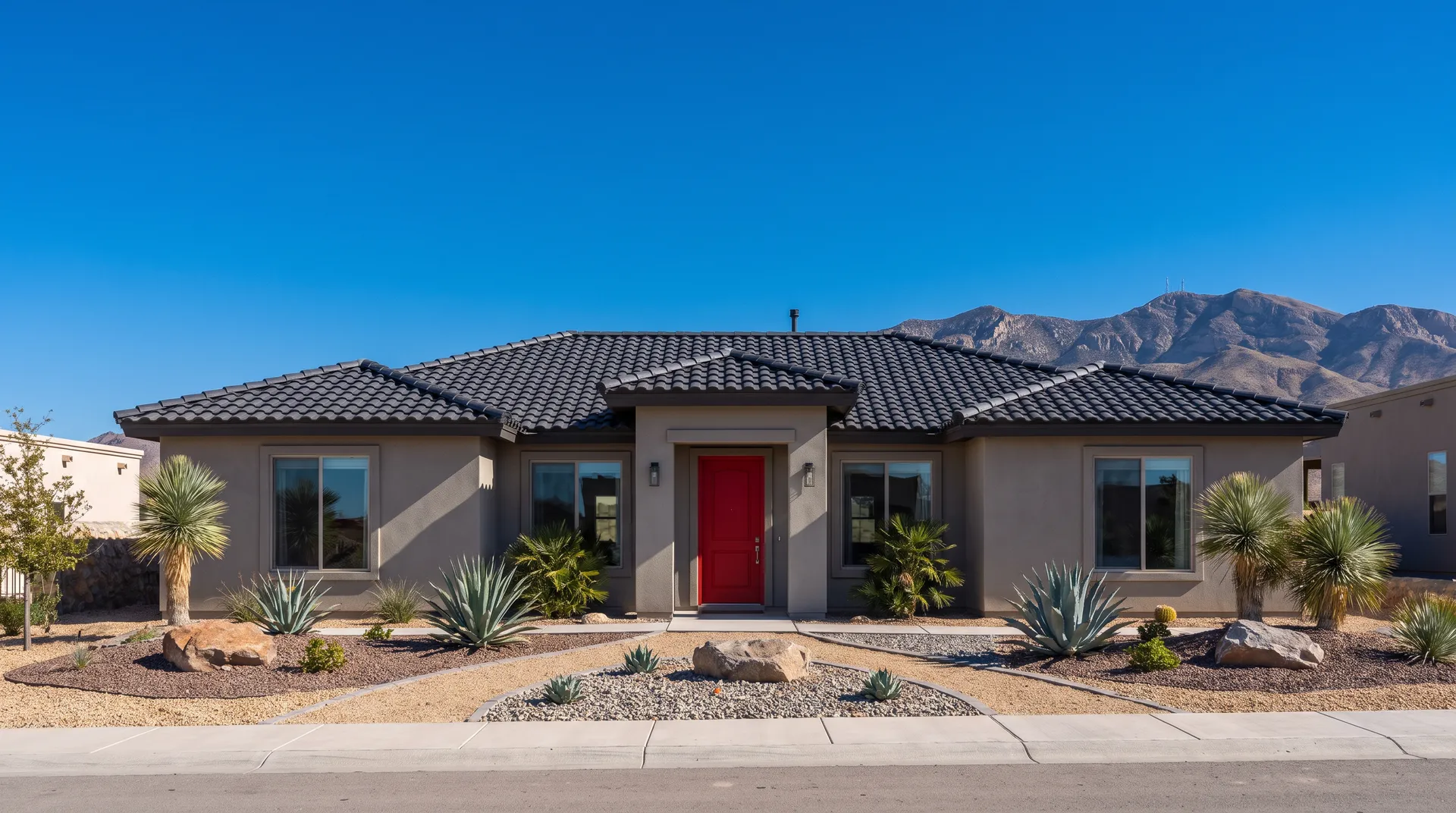
Why a cracked tile is not always a leak, and a leak is not always a cracked tile
Clay and concrete tile is a covering, not the waterproofing. The layer that actually keeps water out of the house sits underneath the tile, against the deck, and it is usually a roofing felt or a synthetic underlayment. The tile mainly sheds bulk water and shields that underlayment from the sun.
That single fact explains most tile roof confusion. A tile can be cracked or chipped and the roof can still be dry underneath, because the underlayment below it is intact and doing its job. The reverse also happens: tile that looks completely fine from the ground can sit over underlayment that has aged out in the El Paso sun, and the first hard monsoon rain finds the gap. Inspecting a tile roof means checking both layers, not assuming the visible one tells the whole story.
How clay and concrete tile roofs actually fail here
Tile handles UV about as well as any roofing material available, which is exactly why it is popular in a city with as much sun as El Paso. What tends to go wrong on a tile roof is a shorter list than what goes wrong on a shingle roof, and it clusters around a few specific points.
- Cracked, chipped, or slipped tile. Impact from hail, a dropped tool, or foot traffic in the wrong spot can crack a tile or knock it loose from its fastener. A slipped tile leaves a gap in the field even if the tile itself is not broken.
- Underlayment breakdown. Years of heat cycling under the tile ages the felt or synthetic membrane beneath it. Once it cracks or thins, tile that looks perfect from the street sits over a roof that is no longer waterproof.
- Flashing and valley failure. Valleys, hip and ridge transitions, and the flashing around chimneys, vents, and skylights are the joints in a tile roof, and joints are where roofs generally leak first, tile included.
- Broken fasteners and battens. On some tile systems, tile hangs on battens or nailed fasteners rather than sitting flush to the deck. A broken fastener or rotted batten lets a whole section of tile shift or slide.
- Mortar and foam adhesive failure. Some tile installations use mortar or foam bedding at ridges and hips. That bonding material ages and can crack loose over time, which is a different repair than a field tile.
What all of these share is that the fix depends on which one you actually have, which is why a tile roof call starts with an inspection rather than a guess based on what is visible from the driveway.
Walking a tile roof safely, or not walking it at all
This is the part homeowners get wrong most often on a tile roof, and it is worth stating plainly: walking tile the wrong way is how a small problem becomes a bigger one. Concrete and clay tile is rigid, not flexible, and a step in the wrong spot cracks it instead of flexing under it the way a shingle would.
The safe zones on most tile roofs are near the eave, low on the roof, and directly over rafters rather than in the middle of a tile span. Anyone walking a tile roof for an inspection or a repair should know where those zones are on that specific tile profile, and should be using padding or boards to spread weight where the roof has to be crossed outside them. A roof inspected by someone unfamiliar with tile can end up with more cracked tiles after the inspection than before it, which defeats the purpose.
This is also the reason we do not recommend homeowners get on a tile roof themselves to check it after a storm. A ground-level look with binoculars, or photographs from a ladder at the eave, tells you more than a walk across the field that risks creating the exact damage you are trying to find.
Matching tile after a repair
Tile repair has a matching problem shingles do not have in quite the same way. Clay and concrete tile profiles, colors, and finishes are produced in runs, and a discontinued profile can be difficult or impossible to match exactly years later.
When an exact match is available, we use it. When it is not, the honest options are sourcing a close match, which may read slightly differently in color or profile up close, or pulling tile from a less visible slope to patch a visible one and using the new material where it will not stand out. We will show you what is actually available for your tile before any repair starts rather than promising a perfect match we cannot deliver, the same way we handle shingle matching on a standard roof repair.
Storm and hail damage on tile roofs
Hail affects tile differently than it affects asphalt shingles. A hail strike can crack or chip a tile outright, sometimes visibly and sometimes only from directly above, which is one more reason a proper inspection after a storm matters on this roof type. Wind can also lift and slip tile at ridges, hips, and edges where fastening is under the most load.
The documentation and claim process works the same way it does on any roof: photographs, a written scope, and a straight answer about what the storm actually did versus what was already there. See storm and hail damage for the full process, including why timing matters and what to watch for with storm-chasing crews after a hail event.
Tracing a leak on a tile roof
The same rule that applies on every roof type applies here, and it matters more on tile because the covering hides so much: water rarely drips straight down from where it entered. It can travel across the underlayment, along a batten, or down a rafter before finding a gap in the decking (the wood layer the roof covering is fastened to) and showing up inside, often several feet from the actual source.
Tracing that path on a tile roof means lifting tile carefully at the suspected area to inspect the underlayment underneath it, rather than guessing from the outside or sealing the surface of a tile that was never the actual problem. See roof leak repair for how we trace a leak on any roof, and if water is actively coming into the house right now, see emergency roof repair.
Tile roof inspections: what we are actually looking at
A real tile roof inspection covers both layers, the tile and what is under it, and it is done in a way that does not create new cracked tile in the process.
| What we check | What it tells us |
|---|---|
| Field tile condition | Cracked, chipped, slipped, or missing tile across each slope, not just the reported spot. |
| Underlayment age and condition | Where accessible, whether the waterproofing layer under the tile is still doing its job or has aged out. |
| Valleys, hips, and ridges | The joints where tile roofs generally leak first, checked for cracked mortar, shifted tile, or failed flashing. |
| Flashing at penetrations | Chimneys, vents, skylights, and swamp cooler curbs, all of which interrupt the tile field and need correct detailing. |
| Fasteners and battens | Whether the tile is still properly secured, especially after wind or foot traffic. |
| Attic and decking, where reachable | Daylight, staining, or damp sheathing that tells us where water has already been getting through. |
You get the findings in writing, with photographs, whether the answer is a small repair, an underlayment problem, or nothing wrong at all.
How a tile roof repair visit runs
The process follows the same structure as any repair on this site, with the extra care a tile roof requires.
- You call or send the form. Tell us what you are seeing: a cracked or missing tile, a stain inside, or damage you noticed after a storm.
- We inspect using tile-safe technique. Walking only where it is safe on that tile profile, and boarding out the rest, so the inspection itself does not add cracked tile.
- We identify the actual problem. Tile, underlayment, flashing, or a combination, since those are different repairs with different scopes.
- You get a written, itemized estimate. Free, and it states plainly what tile matching is realistically available.
- The repair. Broken tile replaced or matched where possible, underlayment replaced where it has failed, and flashing rebuilt where that is the actual cause.
- A final walk-through. We show you what was found and what was done, including photographs of anything that was under the tile.
Keeping a tile roof from needing the next repair
Tile roofs need less regular attention than a shingle roof, but "less" is not "none," and the items that matter are specific to this roof type.
- Stay off it yourself. The single biggest cause of cracked tile we see is foot traffic in the wrong spot, whether from a homeowner, a satellite installer, or another trade walking the field without knowing where it is safe.
- Get it looked at after hail. Cracked or chipped tile from an impact is sometimes only visible from directly above, and catching it early prevents a small crack from becoming a leak path.
- Watch valleys and ridges first. These joints fail before the field tile usually does, so a periodic look at them catches problems while they are still small.
- Do not ignore slipped tile. A tile that has slid out of position leaves a gap even if it never cracks, and it is a quick fix while it is one tile instead of several.
- Get an annual look. Because the underlayment underneath is what actually keeps water out and it is not visible from the ground, a periodic professional check is the only real way to know its condition before it fails.
Related services
Frequently asked questions
Can a tile roof leak even if none of the tile is broken?
Yes, and it is one of the more common surprises on this roof type. The tile is mainly a cover; the waterproofing is the underlayment beneath it. Underlayment ages under the tile from heat cycling over the years, and it can fail while the tile above it still looks perfect. That is why an inspection checks both layers rather than stopping at the visible surface.
Is it safe to walk on my tile roof to check it myself?
We would rather you did not. Concrete and clay tile cracks under a step in the wrong spot, and a roof walked without knowing that specific tile profile can end up with more damage than it started with. A ground-level look with binoculars or photographs from a ladder tells you more without creating a new problem.
Can you match my tile if a piece is broken?
We use an exact match when one is available. Tile profiles and colors are produced in runs and some are discontinued, so an exact match is not always possible years after the original install. When it is not, we will show you the realistic options, a close match or moving tile from a less visible slope, before any work starts, rather than promising a match we cannot deliver.
Do you repair the underlayment under tile, or just the tile itself?
Both, depending on what the roof actually needs. A cracked tile with sound underlayment beneath it is a tile-level repair. Underlayment that has aged out or failed is a different scope, since the tile has to come up carefully to reach and replace it. We tell you which one you have in writing before any work starts.
Does hail damage tile roofs in El Paso?
Yes. Hail can crack or chip tile, sometimes visibly and sometimes only from directly above, and it can also loosen tile at ridges and hips where fastening takes the most load. See our storm and hail damage page for how we document and repair storm damage on any roof type, including tile.
How do you inspect a tile roof without breaking more of it?
By walking only the areas that are safe on that specific tile profile, typically low on the roof and over the rafters rather than the middle of a tile span, and by boarding out the rest to spread weight instead of stepping directly on tile. That technique is the difference between an inspection that finds problems and one that creates them.
What does tile roof repair cost in El Paso?
It depends on whether the fix is tile, underlayment, flashing, or some combination, on how much tile matching is required, and on how the affected area is accessed. Those are genuine variables, so we inspect the roof and give you a written, itemized figure before any work starts. The inspection and the estimate are both free.
Get a free estimate
Tell us what is going on and we will come look at it. Straight answer, written price, no pressure.