
Flat roof repair in El Paso, TX
A flat or low-slope roof does not shed water the way a pitched roof does, so it fails in its own set of ways: seams, parapet flashing (the metal strips that seal the joints around chimneys, vents and walls), scuppers and drains, and ponding water rather than missing shingles. Roofing Pros EPTX repairs flat roofs across El Paso and the surrounding communities, on the common systems found here, and the inspection and written estimate are free.
El Paso has a large amount of flat and low-slope roofing, on homes and small commercial buildings alike, and it is a genuinely different trade from pitched shingle work. The process runs the same five steps as any repair: (1) you call and describe what you are seeing, (2) we get on the roof and inspect the surface, the seams, the drains and the parapet details, (3) you get a written, itemized estimate, (4) we do the repair, matched to the system already on the roof, and (5) a final walk-through. This page is not for you if you want a price before anyone has looked at the roof, or if you are outside El Paso and the surrounding communities. The takeaway: get the free inspection, find out whether the problem is the membrane or the drainage, since those are two very different fixes, and get a written estimate before anything is patched.
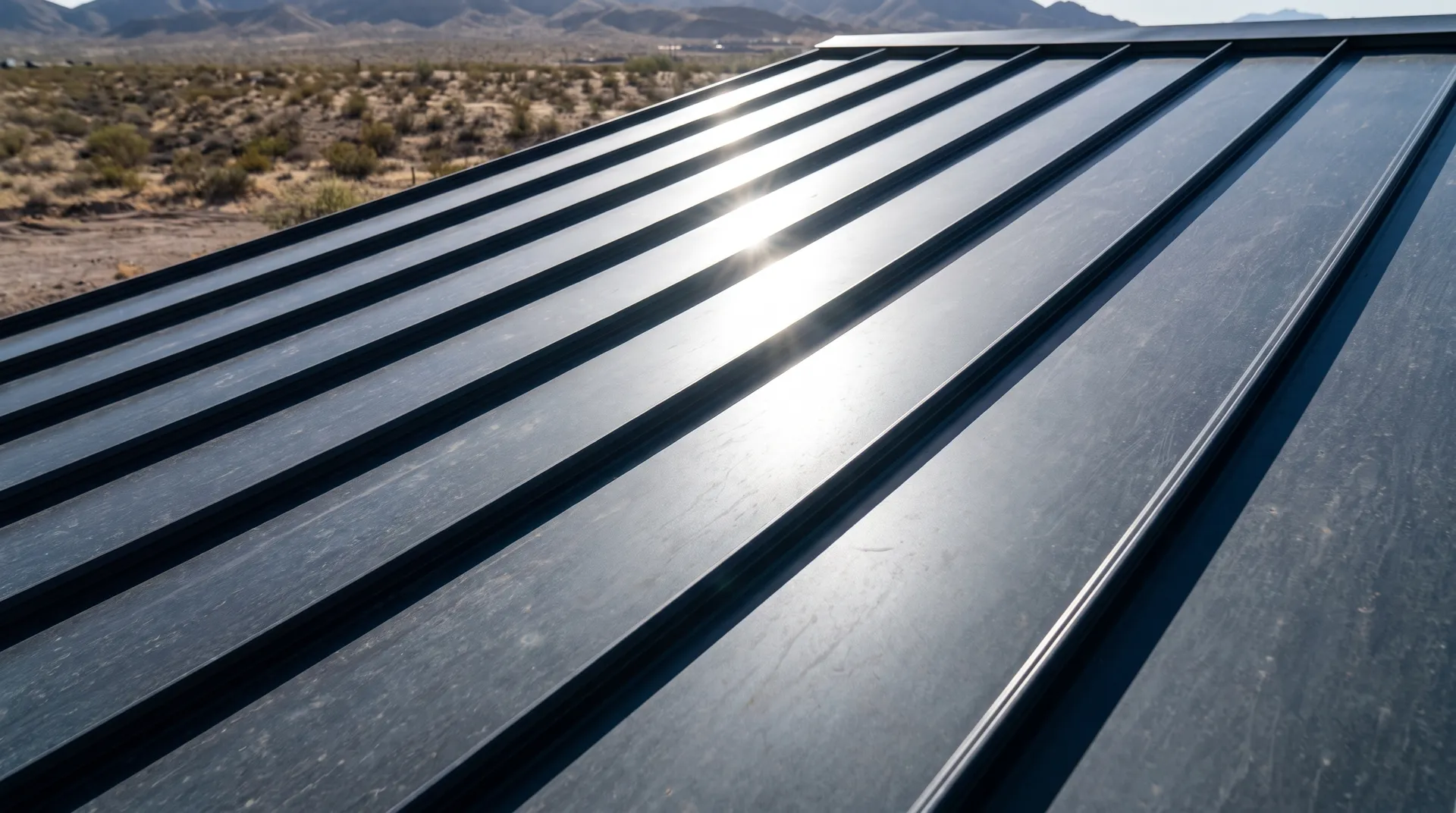
Why flat roofs fail differently than pitched roofs
A pitched roof is built to shed water quickly, so a small flaw usually has a brief window to cause a problem before the water is gone. A flat or low-slope roof does the opposite: water sits on it, sometimes for a while, and anywhere that water can find a weak point, it eventually will. That single difference explains most of what goes wrong on these roofs.
It also means the most common flat roof problem is not a hole. It is drainage: a scupper, a drain or a slope that is not actually moving water off the roof, so water ponds in the same spot after every rain until it finds a seam or a flaw and works through it. Fixing the leak without fixing the drainage behind it is a repeat visit waiting to happen.
The flat roof systems we work on
El Paso has a genuine mix of flat roof systems, on older homes and additions as well as small commercial buildings, and each one fails in its own particular way.
- Built-up roofing (BUR). Layers of asphalt and reinforcing felt, often finished with gravel. Common on older buildings. Failures tend to show up as blistering, cracking, or a seam that has separated after years of UV and heat cycling.
- Modified bitumen. A newer generation of the same asphalt-based approach, applied in fewer, thicker sheets and heat- or torch-welded at the seams. Seam integrity is the main thing to watch, and a seam that was not fully welded originally is a common source of a slow leak.
- TPO and other single-ply membranes. A single sheet of membrane, typically heat-welded at the seams and mechanically or adhesively attached to the deck. Punctures, seam failure, and flashing that has pulled away at a parapet or a penetration are the usual issues.
- Foam (SPF) roofing. Sprayed foam with a protective coating over it. The coating is the wear layer; once it thins or cracks, the foam beneath it can absorb water, which shows up as a soft or spongy spot.
- Elastomeric and acrylic coatings. Often applied over an existing membrane or foam roof to extend its life and reflect UV. A coating that has chalked, cracked or worn thin needs recoating or repair before the layer underneath it starts taking direct sun and water.
We will tell you plainly which system is on your roof and what a repair on that specific system actually involves, rather than treating every flat roof the same way.
Common flat roof problems and what repairing each one involves
Most flat roof calls come down to one of a handful of recurring issues. Here is what each one generally looks like and what fixing it actually takes.
| Problem | What it looks like | What the fix generally involves |
|---|---|---|
| Ponding water | Standing water that is still there days after rain, often near a low spot or a blocked drain | Clearing and correcting drainage first; patching alone does not solve a ponding problem |
| Open or failed seam | A visible split or lifted edge where two sheets of membrane meet | Re-welding or re-sealing the seam with material matched to the existing system |
| Parapet or wall flashing failure | Water tracking down an interior wall near where the roof meets a raised edge | Rebuilding the flashing detail at that transition rather than caulking over it |
| Clogged or damaged scupper or drain | Water backing up at a roof edge or a drain opening that is not clearing | Clearing debris and repairing or replacing the drain or scupper hardware |
| Coating breakdown | Chalking, cracking or a rough, worn surface on a coated membrane or foam roof | Recoating the affected area after repairing anything the coating was protecting |
| Punctures or splits | A visible tear or hole, often from foot traffic or dropped equipment | Cutting back the damaged area and patching with matched membrane material |
Ponding water: the problem behind the problem
Ponding water is the single most common reason a flat roof repair does not hold. Water sitting on a seam for hours after every rain will eventually find its way through that seam, no matter how well it was originally installed, and patching the spot where it got in does nothing about the water that is still going to sit there next time.
The actual fix is almost always about where the water goes rather than where it got in: clearing a blocked drain, correcting a low spot that is not draining, or adding a tapered insulation cricket to move water toward a drain that already works. That is a different scope than a membrane patch, and it is the reason we look at drainage on every flat roof call rather than only at the spot where the ceiling stained.
Flat roof leaks and where they actually start
The same rule applies here as on a pitched roof: the water that shows up inside is often not directly below where it entered, and on a flat roof the water may have traveled sideways under the membrane before finding a seam in the deck. See roof leak repair for how we trace a leak on any roof type, including a flat one.
On a flat roof specifically, the usual suspects are seams, the flashing where the roof meets a parapet wall, penetrations for vents and equipment, and drains or scuppers that are not moving water the way they should. Open field punctures happen but they are less common than the joints and transitions failing first.
Storm damage on flat roofs
Hail and wind affect flat roofs differently than shingle roofs. Hail can bruise or split a membrane or crack a coating without immediately opening it, and that damage becomes a leak later as the weakened spot gets rained on again. Wind can lift flashing at a parapet or peel back an edge that was not fully secured, and downburst gusts common to El Paso monsoon storms hit these edges hard. See storm and hail damage for how we document and repair storm damage generally, and if water is actively coming in right now, see emergency roof repair.
How a flat roof repair visit runs
The process follows the same structure as any repair here, with a few extra steps specific to a low-slope roof.
- You call or send the form. Tell us what you are seeing: a stain, standing water, a visible tear, or something you noticed after a storm.
- We inspect the whole roof, not just the reported spot. On a flat roof the drainage, the seams, and the parapet flashing all get checked, since the cause is often somewhere other than where the water showed up inside.
- We identify the system. Built-up, modified bitumen, TPO, foam or coated, since the repair material and method has to match what is already on the roof.
- You get a written, itemized estimate. Free, and it states plainly whether this is a seam repair, a drainage fix, a recoat, or some combination.
- The repair. Done with material compatible with the existing system, and any standing water problem addressed at its source rather than only at the visible damage.
- A final walk-through. We show you what was done and, where relevant, what to watch for after the next hard rain.
Preventing the next flat roof problem
Flat roofs respond especially well to a little regular attention, because most of what goes wrong on them starts as a drainage issue rather than sudden storm damage.
- Clear drains and scuppers before June. Wind-blown dust and grit collect on a flat roof here even without nearby trees, and clogged drainage is exactly what turns a normal rain into standing water.
- Check after every serious storm. Hail and downburst wind can bruise a membrane or lift flashing at a parapet without opening it immediately; catching that early prevents the leak it will eventually become.
- Watch coating condition on foam and coated membrane roofs. Chalking or thinning coating is a sign the protective layer needs attention before the material underneath starts taking direct UV and water.
- Keep foot traffic to a minimum. Equipment service, satellite work and casual walks across a flat roof all risk punctures on a membrane that is otherwise doing its job.
- Get it looked at twice a year. The same seasonal rhythm we recommend for any roof in this climate applies here too; see roof maintenance for the full schedule.
Repair or recoat or replace on a flat roof
Flat roofs have a middle option a shingle roof does not: recoating. A membrane or foam roof that is structurally sound but showing wear on its protective coating can often be recoated rather than replaced, which is meaningfully cheaper and extends its life. That is only the right call when the membrane underneath is actually in good condition; recoating over hidden damage just buries the problem.
A targeted repair is right when the issue is local: one bad seam, one drain, one punctured spot. Replacement is the honest answer when the membrane is failing broadly, seams are opening in multiple places, or the decking underneath has taken on water and gone soft. We will tell you which category your roof is in and show you what we found.
Related services
Frequently asked questions
What flat roof systems do you repair?
Built-up roofing, modified bitumen, TPO and other single-ply membranes, sprayed foam (SPF), and elastomeric or acrylic coatings, on both homes and small commercial buildings across El Paso. We will tell you which system is on your roof and what a repair on that specific system involves.
Why does my flat roof keep leaking in the same spot?
Most often because the underlying cause was never addressed, usually ponding water sitting on a seam or a drain that is not clearing properly. Patching a seam without fixing the drainage behind it is a repeat leak waiting to happen. We look at drainage on every flat roof call for that reason.
Is ponding water on a flat roof always a problem?
A small amount that clears within a day or so after rain is common and not usually a concern. Water that is still standing days after the rain is worth having looked at, since it means a low spot, a blocked drain, or a roof surface that is not moving water the way it should, and that is exactly the kind of thing that eventually finds a seam.
Can a flat roof be recoated instead of replaced?
Often, yes, if the membrane or foam underneath the coating is still structurally sound. Recoating restores the protective, reflective layer and is meaningfully cheaper than replacement. It is only the right call when we have confirmed the roof underneath is genuinely in good shape, which is part of what the inspection settles.
Do you repair commercial flat roofs, not just residential?
Yes, small commercial buildings as well as homes with flat or low-slope sections. The systems and the failure points are largely the same, seams, flashing, drainage and coating condition, whether the building is a house or a small commercial property.
How do I know if my flat roof needs a repair or a full replacement?
The inspection answers that. A local issue, one seam, one drain, one punctured spot, on a membrane that is otherwise sound is a repair. Broad seam failure, widespread coating breakdown, or soft decking underneath points toward <a href="/roofing/roof-replacement/">replacement</a>. We show you what we found and explain which category applies.
What causes most flat roof leaks in El Paso?
Ponding water finding its way through a seam, flashing failure at a parapet wall, and drains or scuppers clogged with the wind-blown dust common here. UV and daily heat cycling also age these systems faster than a milder climate would, which is why coating condition matters as much as the membrane itself.
Do you inspect flat roofs for free?
Yes. The inspection and the written, itemized estimate are both free, whether the finding is a small repair, a recoat, or nothing at all. The report is yours to keep either way.
Get a free estimate
Tell us what is going on and we will come look at it. Straight answer, written price, no pressure.