
Emergency roof repair in El Paso, TX
An emergency roof repair is not a finished repair. It is the fast, temporary work that stops more water from getting into the house right now, done safely, followed by the permanent fix once conditions and daylight allow it. Roofing Pros EPTX advertises 24 hour service and answers calls day or night across El Paso and the surrounding communities.
What actually happens depends on your roof and what the storm did to it, and we will not promise a specific detail or a specific arrival window here, because that depends on the weather, the roof, and what is going on across the city that night. What we can tell you is the shape of it: you call and describe what you are seeing, we talk you through protecting the inside of the house while help is on the way, we get out to you and assess it safely once conditions allow, we do whatever temporary protection the situation actually calls for, and then we schedule the permanent repair for a dry roof where the work can be done right. This page is not for you if you want a guaranteed response time in writing, a named tarp product, or a promise before anyone has seen the roof; none of those are things an honest roofer commits to sight unseen. The takeaway: call first, protect the inside of the house while you wait, and let us tell you on the roof what it actually needs.
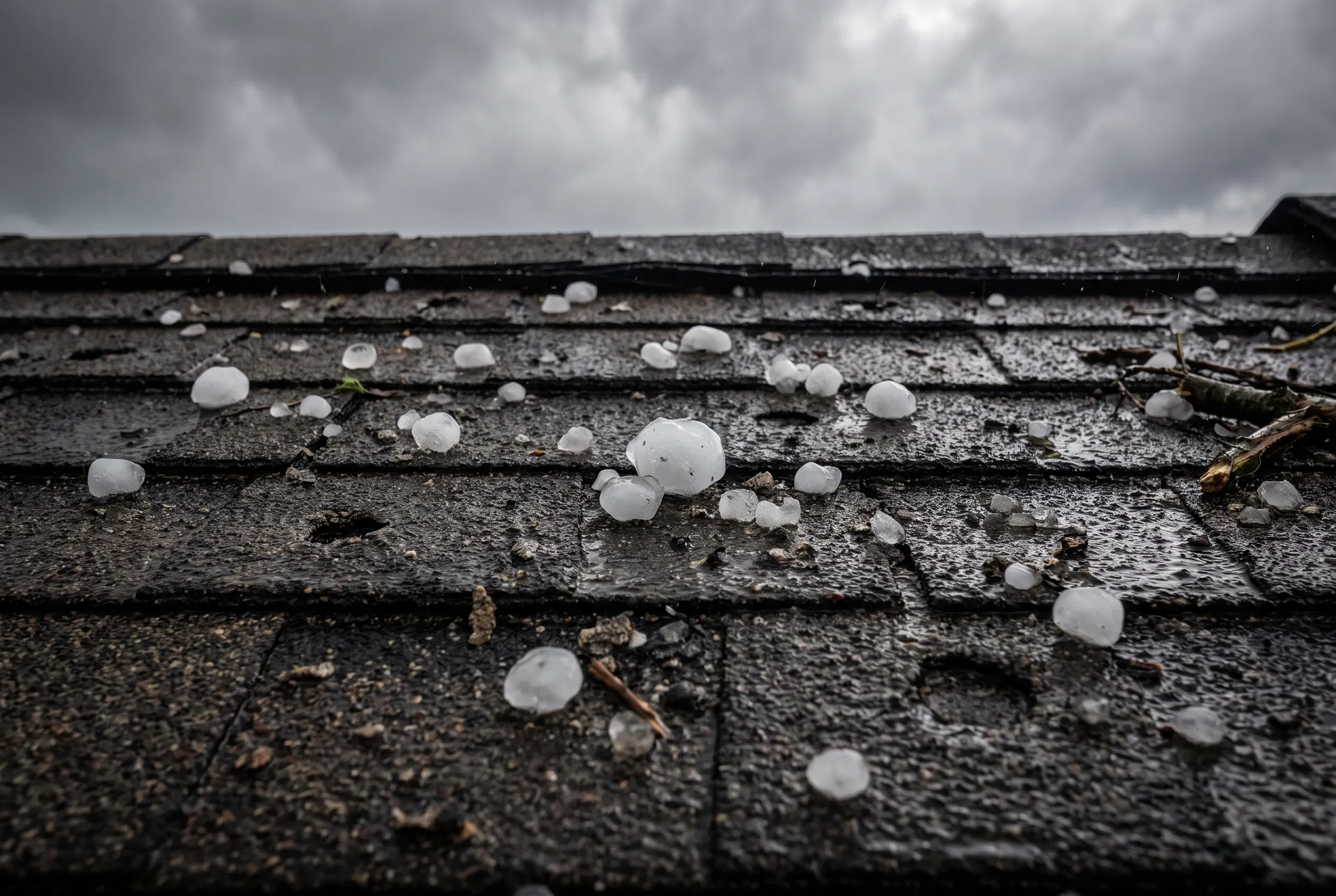
What counts as a roofing emergency
Not everything that looks alarming needs a call at two in the morning, and not everything that looks minor can wait. Here is a rough way to sort it.
- Active water coming into the house. Dripping, running, or a ceiling that is wet to the touch. This is the clearest case for an emergency call, day or night.
- A hole or missing section you can see or feel from inside. Daylight through the attic deck, or a section of roof that came off in the wind, needs attention before the next round of weather.
- A tree limb or debris on the roof after a storm. Even without a visible hole, impact damage from a fallen limb should be checked before the next storm finds the weak spot.
- A tarp or temporary patch that failed. If a prior temporary fix has come loose or torn, that is worth a call rather than waiting for the next storm to test it again.
A missing shingle with no interior sign of water, a small cosmetic issue, or damage you noticed on a dry day is real and worth fixing, but it is a scheduled repair rather than a middle-of-the-night call.
What to do in the first few minutes
The goal before anyone arrives is limiting what the water does to the inside of the house, not fixing the roof yourself.
- Call and describe it. Tell us water is actively coming in and roughly where in the house it is showing up.
- Move what you can. Furniture, electronics and anything absorbent out from under the water.
- Put down containers. A bucket or bin, with a towel underneath to catch splash, wherever water is dripping.
- Relieve a bulging ceiling if you see one. Trapped water in a ceiling will eventually let go all at once. A small controlled hole at the low point, poked with something narrow, drains it in a contained way and does less damage than a collapse.
- Cut power to any affected fixture. If water is anywhere near a light fixture or ceiling fan, switch that circuit off at the breaker before it becomes an electrical problem on top of a roofing one.
What emergency protection generally involves
The specifics depend on the roof and on what actually opened it up, so we are not going to describe a fixed procedure or promise a particular material here. In general terms, emergency work on a roof like this is about covering the affected area to keep more water out and protecting the parts of the house below it, in a way that can be safely done given the conditions at the time.
That is different from a permanent repair in two ways. First, it is meant to hold for a limited period, not for the life of the roof, so it gets followed up with real work once the weather clears. Second, safety governs what gets done and when; if conditions on the roof are not safe, the priority shifts to protecting the interior of the house until they are. We will tell you plainly what was done, why, and what still needs to happen once we are back on a dry, safe roof.
The permanent repair itself follows the same process as any other roof repair: we identify exactly what failed, give you a written estimate, and do the work properly rather than layering more temporary material over the same spot.
Why El Paso storms create this problem in bursts
This is not a year-round issue at the same intensity. NOAA defines the North American monsoon as reaching this region roughly mid-June through September, and a large share of the annual rainfall arrives in that stretch, in hard, fast storms with downburst wind rather than steady rain spread through the year. That pattern is exactly why emergency calls cluster tightly around those weeks and around any severe winter storm that comes through.
A roof that has a hidden weakness, a cracked pipe boot, a creased shingle, an old sealant repair, can sit fine for months and then fail the moment a monsoon cell actually tests it. That is also why a roof that seemed fine on a calm day can suddenly be letting water in during a storm; the defect was there all along and simply had not been rained on hard enough yet. See our storm and hail damage page for what to do about the roof once the emergency itself has passed.
Emergency flat roof problems
Flat and low-slope roofs fail differently in a storm than a pitched shingle roof, and they are common across El Paso homes and small commercial buildings. Because water does not run off quickly, a torn seam, a failed drain, or a split in the membrane can let a large amount of water sit and work its way in over the course of one storm rather than shedding away.
The temporary response is similar in principle, cover what is open and get water moving off the roof again rather than letting it pond, but the details differ from a shingle roof. See flat roof repair for how these systems generally fail and what a proper repair on each one involves.
What happens after the emergency call
The emergency visit is the first step, not the whole job. Once the immediate water is stopped and the interior is protected, there is still a real repair to plan.
- We assess the full extent. Once it is safe and, ideally, dry, we get a complete look at what the storm actually did, not just the spot that was letting water in.
- You get a written estimate. Itemized, before any permanent work starts, the same as any other repair.
- We schedule the permanent repair. Done properly, on a dry roof, with material seated and sealed the right way rather than rushed.
- Interior damage gets addressed. Because we also do carpentry and framing, drywall, wet decking (the wood layer the roof covering is fastened to) and rotted framing found along the way can be part of the same job.
- If it is a storm claim, we document it. Photographs and a written scope you can hand to your insurance adjuster, covered in more detail on our storm and hail damage page.
What not to do while you wait
A few instincts during an active leak make the situation worse rather than better, and they come up often enough to name directly.
- Do not climb up there yourself. Getting on a wet, dark or storm-active roof to look is not worth what it risks. That assessment is our job.
- Do not smear sealant over a suspected spot. It rarely reaches the actual entry point on a wet roof in the dark, and it can hide the evidence we would otherwise use to trace the real source once we get there.
- Do not ignore a bulging ceiling. Trapped water gets heavier by the minute. A controlled release at the low point is far less damage than the ceiling giving way on its own.
- Do not delay calling in hopes it slows down. Every hour active water continues adds to what gets damaged inside, whatever the hour.
After the emergency: getting back to normal
Once the immediate danger has passed and the roof is protected, there is usually still work to plan, and it helps to know the shape of it going in. A permanent roof repair is scheduled for conditions that allow it to be done properly. Any interior damage, wet drywall, damaged flooring, a stained ceiling, gets assessed separately and can often be handled by the same crew, since we also do remodel and interior work. If the cause was a storm, we document everything with photographs before cleanup starts, because that record is what your insurer will want to see, and our storm and hail damage page walks through that process in detail.
Homeowners who have been through an emergency call once are often the ones who start scheduling regular roof maintenance afterward, because most emergencies trace back to a small defect that had been sitting on the roof for a while before a storm finally tested it hard enough to find it.
Related services
Frequently asked questions
Do you really answer calls at any hour?
Yes. Roofing Pros EPTX advertises 24 hour service, and roof emergencies happen during storms and in the middle of the night rather than during office hours, so that is when we need to be reachable. Call and tell us what you are seeing.
How fast will someone get to my house?
It depends on the storm, the roof, road conditions, and how many calls are coming in across the city at the same time, so we are not going to give you a specific number of hours here; anyone who does before seeing the situation is guessing. What we can tell you is that active water gets treated as urgent, and we will be straight with you on the phone about what to expect that night.
What will you actually do when you get there?
It depends on what the roof needs and on the conditions at the time, since safety governs what can be done on a wet or dark roof. In general the first goal is covering the affected area and protecting the interior, with the permanent repair scheduled for a dry roof once conditions allow. We will walk you through exactly what was done before we leave.
Is emergency work a permanent fix?
No, and treat any roofer who tells you otherwise with suspicion. Emergency work is meant to hold for a limited period and buy time. The permanent repair happens separately, on a dry roof, where material can be properly seated and sealed, and it gets scoped and estimated the same as any other repair.
What should I do while I wait for you to arrive?
Protect the inside of the house rather than the roof. Move belongings out from under the water, put down containers, relieve a bulging ceiling at its low point if you see one forming, and cut power to any fixture the water is near. Stay off the roof, especially in the dark or during active weather.
Do you handle emergency calls for flat roofs?
Yes. Flat and low-slope roofs are common here and they fail differently in a storm, usually through a torn seam, a failed drain, or ponding rather than a single hole. See our <a href="/roofing/flat-roof-repair/">flat roof repair</a> page for more on how those systems work and fail.
Will emergency repair damage my roof further?
Done correctly, no. The point of emergency work is to reduce ongoing damage, not add to it, and it is done in a way that does not complicate the permanent repair that follows. If a prior emergency patch was done badly by someone else, tell us; that history is useful information rather than an embarrassment.
Is there a call-out fee for an emergency visit?
We do not publish a specific number here because pricing depends on the situation, but we will tell you what to expect on the phone before anyone drives out, and the written estimate for the repair itself is always free with no obligation to hire us.
Get a free estimate
Tell us what is going on and we will come look at it. Straight answer, written price, no pressure.