
Roof inspections in El Paso, TX
A roof inspection is a close look at the roof surface, the flashing, the penetrations and the drainage, written up with photographs so you know exactly where the roof stands. Roofing Pros EPTX inspects roofs across El Paso and the surrounding area, and the inspection is free. If the roof is fine, we will tell you it is fine and put that in writing.
An inspection runs in five steps: (1) you call and describe what you are seeing, or ask for a routine or pre-storm look, (2) we walk the roof surface slope by slope and check every penetration, flashing, ridge and drain, (3) where we can reach it we check the attic side for daylight, staining or damp insulation, (4) you get a written report with photographs, whether the finding is a problem or a clean roof, and (5) if there is a problem, you get an itemized estimate for the repair or replacement, with no obligation attached. What the inspection settles is repair versus replacement versus nothing. Repair is the answer when the finding is local: a pipe boot, one section of flashing, a few shingles. Replacement is the answer when the findings repeat across the roof or the decking (the wood layer the roof covering is fastened to) is soft in more than one place. A written finding of no problem is a legitimate third outcome, and we hand those out when that is what the roof shows. This page is not for you if you want a same-day price with nobody looking at the roof, or if you are outside El Paso and the surrounding communities. It is also not a substitute for a full home inspection when you are buying a house; it is the roofing-specific look a general inspector usually recommends and the step buyers usually skip. The takeaway: get the free inspection, get it in writing, and use the photographs to decide, whether that means repair, replacement, or nothing at all.
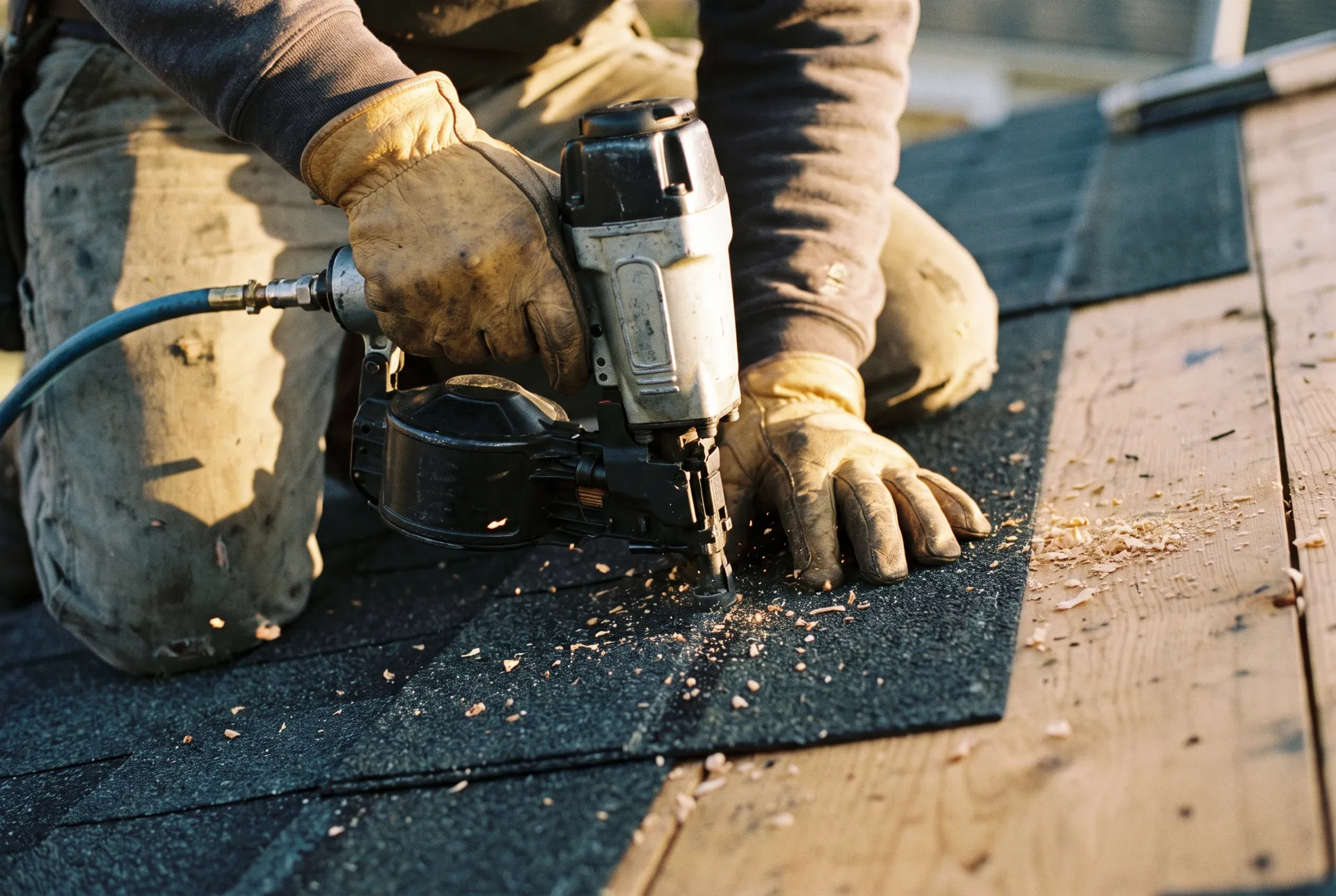
What a roof inspection actually covers
A real inspection is systematic. It is not a look from the driveway and it is not a walk around the yard, both of which get sold as inspections and neither of which can find the things that matter.
- The roof surface, slope by slope. Granule loss, cracking, curling, blistering and hail bruising. Damage is often concentrated on the slopes that face the weather, so each one gets checked rather than generalized from the easiest to reach.
- Every penetration. Plumbing vent boots, exhaust vents, skylights, chimneys, satellite mounts and swamp cooler curbs. This is where the majority of leaks start.
- Flashing at walls and valleys. The metal that seals every joint. It is the most common failure point on an El Paso roof and the easiest to install badly.
- Ridge, rake and drip edge. The edges wind gets under first, and where wind-driven monsoon rain finds its way in.
- Ventilation. Intake and exhaust. Poor attic ventilation cooks a roof from underneath and is a leading cause of premature failure in this climate.
- Drainage. Whether water is actually leaving the roof or pooling somewhere it should not. Gutters, scuppers and drains full of wind-blown dust are normal here and cause real problems.
- The attic, where accessible. The underside of the deck shows water tracks, daylight and damp insulation long before a ceiling stains.
- Flat and low-slope sections. Seams, ponding, membrane condition and flashing at parapet walls, all of which fail differently from a pitched roof.
What you get afterward
A written summary of the roof condition and photographs of anything that matters, so you are looking at your own roof rather than taking somebody word for it. If there is a problem, you get an itemized estimate to fix it. If there is not, you get told that in writing.
The report is yours. Take it to another contractor, hand it to an insurance adjuster, put it in the file for when you sell the house, or do nothing with it at all. There is no obligation attached and there is no follow-up campaign.
We are aware that free inspections are sometimes a sales device, and that a homeowner who has been told three times that they need a new roof has good reason to be suspicious. That is not what this is. A written finding of no problems is a perfectly good outcome and we hand those out regularly. Read more about how we work if you want to know who is showing up.
When you should have your roof inspected
There are a handful of moments where an inspection is clearly worth the hour, and one background rhythm that catches everything else.
- After any significant hail or wind storm. Hail bruising is usually invisible from the ground, and documenting it close to the date of the storm is much easier than establishing it later.
- Before buying a home. A roof is one of the most expensive things a house can be hiding, and a standard home inspection is not a roof inspection.
- Before selling. Knowing what is up there before a buyer inspection does removes the leverage a surprise creates during negotiation.
- When the roof passes about fifteen years. In this climate a roof that was fine two summers ago may genuinely not be now.
- Any time you see evidence. A ceiling stain, a drip, granules in the gutter, or debris in the yard that used to be attached to your roof.
- Before monsoon season. Spring is the right time to find the small thing, while it is still small and while the weather allows a proper fix.
- Once a year, as a habit. Annual is a reasonable rhythm here, plus after hail. Ours is free, so the only cost is the appointment.
An inspection is also the starting point for ongoing roof maintenance: the same look, done on a rhythm, catches most of what shortens a roof in this climate before it becomes a repair.
Why El Paso roofs need looking at more often
Roof lifespans quoted on product literature assume an average climate. This is not one. El Paso is one of the sunniest cities in the country, and UV is the single biggest ager of an asphalt roof. Summer air temperatures above 100 degrees put roof surface temperatures far higher still.
That heat cycles daily. Everything on the roof expands under the afternoon sun and contracts overnight, and metal, asphalt and wood all do it by different amounts. Repeated thousands of times, that movement works joints and fasteners loose. Then winter adds freeze and thaw: nights below freezing against mild afternoons, so any water in a crack expands and widens it night after night.
Finally the monsoon arrives, per NOAA generally mid-June into September, and delivers much of the annual rainfall in a small number of hard storms carrying hail and downburst wind. A roof here is dry and untested for months and then tested hard several times in a few weeks. That is why an El Paso roof can look perfectly intact from the street and fail on the first serious storm of the season.
Roof inspection for buying or selling a home
A general home inspection includes the roof, but it is not the same thing. Most home inspectors assess the roof from the ground, from a ladder at the edge, or with binoculars, and their report will often say the roof appeared serviceable with a recommendation to have a roofing contractor evaluate it. That recommendation is the actual advice, and it frequently gets skipped.
For a buyer, the difference is money. A roof with two years left and a roof with fifteen look nearly identical from the yard, and the gap between them is one of the largest single line items a house can hand you. Knowing which one you are buying is worth an hour before closing, and a written report gives you something concrete for the negotiation rather than a feeling.
For a seller, the logic runs the other way. Finding out what is up there before the buyer inspection does means you choose how to handle it: fix it, disclose it, or price it in. Finding out during the option period means somebody else is setting the terms. Either way we put it in writing and you decide what to do with it.
Inspections after a storm, and insurance timing
Storm inspections are their own thing, and the timing matters more than most homeowners realize. Damage documented within days of a storm is clearly linked to that storm. The same damage found two years later looks like ordinary age, and it is far harder to attribute.
On a storm inspection we look at bruise density slope by slope, whether shingles have been lifted and broken free of their adhesive seal, the condition of flashing and ridge, and the soft metals around the property. Dents in gutters, downspouts, vent caps and air conditioner fins are strong physical evidence of what the roof took, and they are part of the record.
You get photographs and a written scope you can hand directly to an adjuster. We are roofers rather than public adjusters, so we will not interpret your policy or promise you an outcome on a claim. What we will do is make sure what the storm did is recorded clearly. See storm and hail damage for how that process usually runs.
What we find most often
After enough roofs in one city, patterns emerge. These are the findings that come up again and again on El Paso homes, and most of them are cheap to fix at the point we find them.
- Cracked plumbing vent boots. The most common single finding. A small rubber collar in relentless UV, and a very common leak source once it splits.
- Failed or wrongly installed flashing. Often caulk where layered metal should be. It works for a season and then it does not.
- Poor attic ventilation. A roof cooking from underneath ages far faster than the same roof properly vented, and this is one of the most overlooked issues here.
- Ponding on flat sections. Usually a drainage problem rather than a membrane problem, and patching the membrane does not solve it.
- Damage from other trades. Satellite mounts, solar hardware and swamp cooler service leave holes that were never sealed properly.
- Unrepaired hail bruising. Found on roofs whose owners had no idea the storm did anything, sometimes years after the fact.
- Previous repairs that missed. Old sealant above a stain rather than at the entry point, which tells us somebody guessed.
How an inspection appointment runs
It is straightforward and it does not take your whole day. Here is the sequence so you know what you are agreeing to.
- You book it. By phone or through the free estimate form. Tell us anything you have already noticed, because it directs where we start.
- We arrive and talk to you first. Two minutes on the age of the roof, any known history, and what prompted the call.
- We get on the roof. Physically, and across the whole roof, not just the slope facing the street.
- The attic, if we can get in. The underside of the deck settles questions the surface leaves open.
- Photographs throughout. Anything that matters gets recorded, including the things that are fine.
- We walk you through it. Before leaving, in plain language, showing you the pictures. You should understand your own roof by the end of it.
- You get the written report. With an itemized estimate if work is needed, and a clear statement if it is not.
Inspecting tile, metal and flat roofs
Not every roof in this city is asphalt shingle, and inspecting the others properly requires knowing how they fail. Somebody who only knows shingles will walk a tile roof and break it, which is a real cost created by the inspection itself.
On concrete and clay tile, the tile is a rain screen and the waterproofing is the underlayment beneath it. A tile roof can therefore be leaking with every tile perfectly intact, and the inspection has to be about the underlayment, the flashing and the details rather than the visible surface. Tile also needs to be walked carefully, in the right places, or not at all. See tile roof repair for more on how cracked, slipped and broken tile actually gets fixed.
Metal roofs are inspected at fasteners, seams and penetrations, because that is where thermal movement concentrates rather than in the panel itself. Flat and low-slope roofs are inspected for seam condition, ponding, membrane integrity and flashing at parapet walls. On those, drainage is often the entire story. We work on all of these, which is why we can tell you what is actually wrong instead of what is wrong with a shingle roof.
What to do with the report
The most likely outcome of an inspection is not a job for us. It is a homeowner who now knows where they stand, and that is a useful thing to own even when nothing needs doing this year.
If the roof is sound, keep the report and the photographs. They are a dated baseline, and a dated set of clear before pictures is the single most useful thing you can have if a storm later damages the roof and somebody questions when it happened. If small items came up, they are almost always cheaper now than after another monsoon season; that is the whole logic of catching them early. If the roof is genuinely finished, you have photographs and an itemized number to compare against other bids, which is exactly what you should be doing.
From there the next step is either a repair, a replacement, or nothing at all, and we are content with any of the three. We are building this company here in El Paso for the long run, and a homeowner who trusts what we told them is worth more than a job we talked somebody into.
Related services
Frequently asked questions
Is the roof inspection really free?
Yes. The inspection and the written estimate are both free, with no obligation to hire us and no charge if you decide to do nothing. The report and photographs are yours to keep and to take anywhere, including to another contractor for a second opinion. A written finding that your roof is in good shape is a perfectly normal outcome here and we hand those out regularly.
How often should an El Paso roof be inspected?
Once a year plus after any significant hail or wind event, for the climate reasons covered above. The best annual timing is spring, before the NOAA-defined monsoon window opens, because that is when a small finding can still be fixed easily and in good weather rather than during a storm.
Do you inspect roofs for a home purchase?
Yes, and it is worth doing separately from the general home inspection. Most home inspectors assess a roof from the ground or a ladder and then recommend a roofing contractor evaluate it, which is the real advice and is often skipped. A roof with two years left and one with fifteen look almost identical from the yard. We put the finding in writing with photographs, so you can use it in the negotiation.
How long does a roof inspection take?
For a typical single-family home, generally under an hour on site, sometimes longer on a large or complex roof with several planes, or where a leak needs tracing. You do not need to be home the whole time, though it helps if you are there at the end so we can walk you through the photographs. The written report follows so you have everything in a form you can keep and share.
Do I need to be home for the inspection?
Not for the roof itself, though it is better if you are. Attic access usually requires somebody letting us in, and the most useful part of the appointment is the few minutes at the end where we show you the pictures and explain what they mean. If you cannot be there, we will do it and send the written report with photographs, and then talk it through with you by phone.
Will you tell me I need a new roof when I do not?
No, and we would rather you judged that by the photographs than by our word for it. Everything in the report is shown, so you can see the condition of your own roof rather than being told about it. Talking a homeowner into a replacement they do not need is the fastest way to lose a reputation in a city this size, and we intend to be working here for a long time.
Can I inspect the roof myself?
You can do a useful amount from the ground and from inside, and we would encourage that. Look for granules at the downspout outlet, uneven lines along the ridge, dark patches on a slope, and debris in the yard, then take a flashlight into the attic and check for daylight, streaking or damp insulation. What we would ask is that you stay off the roof. Hot asphalt is slick and soft, and walking it scuffs loose the granules you are trying to protect.
What if the inspection finds problems I cannot afford to fix now?
Then you get told plainly what is urgent and what can reasonably wait, which is information worth having on its own. Not every finding is an emergency; a worn pipe boot and a soft deck are very different conversations. We will tell you which items risk letting water in during the next monsoon season and which are simply worth watching, so you can spend on the right thing first rather than on everything at once.
Get a free estimate
Tell us what is going on and we will come look at it. Straight answer, written price, no pressure.